
Natapos mo na. Medal, check! Libreng banana at Gatorade sa finish line, check! May yumakap sa finish line, okay we don’t talk about that.
On a serious note, your legs feel like they’ve been replaced with concrete blocks, your feet are screaming, and every LRT/MRT escalator (the ones that are actually working) feels like a personal attack. BGC Night Run, MOA seaside, or whatever race had you up at 3AM eating pandesal before a gun start, your body gave everything out there. Now it’s time to pay it back.
Here’s your complete guide to recovering the right way after race day in Manila.
What Happens to Your Body After Running a Marathon
Running 21 or 42 kilometers puts the same kind of stress on your muscles, joints, and connective tissues. Micro-tears form in your muscle fibers, inflammation kicks in, and your glycogen stores are practically wiped out. Full marathon runners tend to feel this more intensely, but half marathoners are far from exempt. Your body worked hard too, and it deserves the same level of care.
Add Manila’s heat and humidity to the equation (because let’s be honest, even early morning races here can feel like running inside a rice cooker), and your body is dealing with extra dehydration and heat stress on top of everything else.
Recovery isn’t optional, it’s part of the training.
The First 30 Minutes: Don’t Just Stop and Sit
It’s tempting to collapse the moment you cross the finish line, but resist the urge. Your body needs a gradual cool-down.
- Keep moving slowly – walk around for at least 10 to 15 minutes to help your heart rate come down naturally and prevent blood from pooling in your legs.
- Grab your recovery snack – aim for a mix of carbs and protein within 30 minutes. Bananas with peanut butter, chocolate milk, or a rice meal from a nearby food tent all work great.
- Hydrate smartly – water is good, but also replenish electrolytes. Pocari Sweat, Gatorade, either works fine. Coconut water if you want all-natural!
- Change out of wet clothes – sweaty gear plus Manila’s humidity is a recipe for skin irritation and chills.
The First 24 Hours: Rest Hard
This is not the time to prove anything to anyone. Your one job is to rest.
Sleep and Elevation
Get as much sleep as you can the night after your race. If your legs are swollen or heavy, elevate them while you rest, prop them up on pillows while lying down. This helps with circulation and reduces puffiness.
Ice or Cold Water Immersion
Cold therapy is one of the most effective tools for reducing inflammation. If you have a bathtub (lucky you), fill it with cold water and ice and soak for 10–15 minutes. No bathtub? No problem. A cold shower focused on your legs works too, and it’s much easier to manage in a typical Manila condo or apartment.
Light Stretching Only
Your muscles are already damaged and inflamed so this is not the time for aggressive stretching. Gentle range-of-motion movements are enough. Save the deep flexibility work for later in the week.
Days 2 to 4: The “Why Do I Still Hurt?” Phase
Welcome to DOMS or Delayed Onset Muscle Soreness. This usually peaks around 48 hours post-race, which means days two and three might actually feel worse than the day after.
Keep Moving Lightly
Complete rest can actually slow recovery. Light activity like a 20-minute walk, easy swimming, or a slow bike ride helps flush out metabolic waste from your muscles without adding more stress.
Eat to Rebuild
Your muscles need protein to repair those micro-tears. Load up on chicken, eggs, fish, tofu, or legumes. Don’t skimp on carbs either since your glycogen stores need restocking. This is genuinely one of the best excuses to eat extra rice, so enjoy it.
Compression Gear
If you have compression socks or tights, wear them during the day. They help with circulation and can reduce that heavy, achy feeling in your legs. Some runners even sleep in them during the first couple of nights.
Massage Therapy
This is where relief begins. Not all massages are suitable after a marathon, choosing the wrong type can prolong your recovery or cause injury.
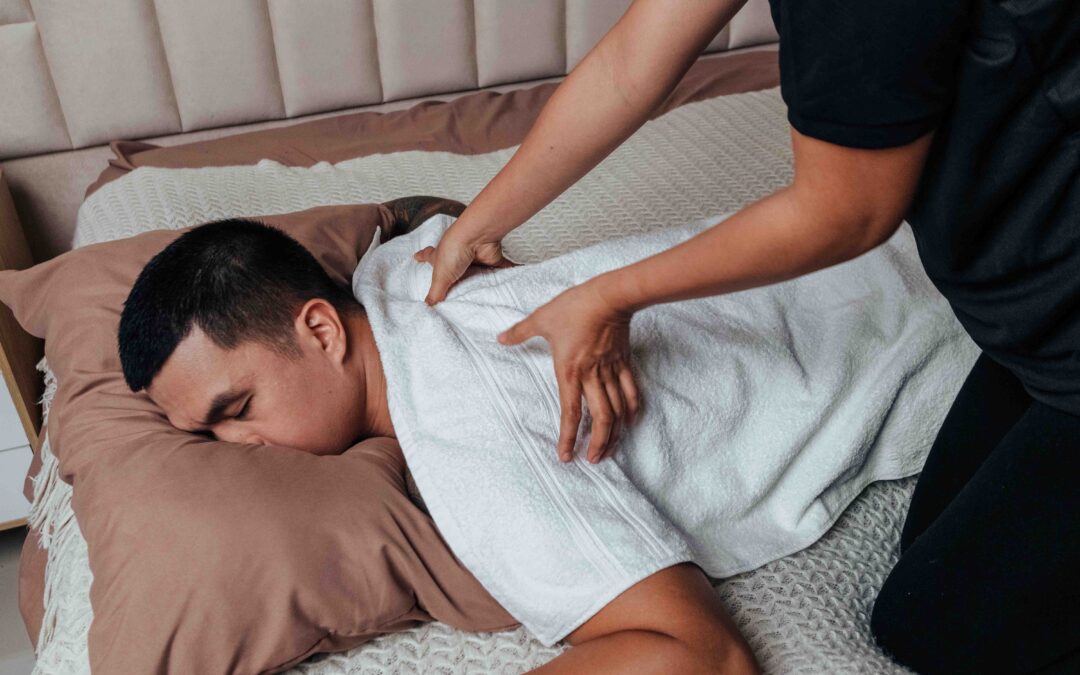
Sports massage is specifically designed for athletic recovery. It targets the muscle groups that took the most beating during your run, including your calves, quads, hamstrings, and glutes, and works to improve circulation, flush out metabolic waste, and reduce that deep, stubborn tightness. It’s probably the most targeted option for runners.
Swedish massage is another great choice, especially if your body is still feeling pretty sensitive. It uses longer, gentler strokes that promote relaxation, improve blood flow, and help your nervous system shift out of the high-stress state it’s been in throughout your training and race. Think of it as a full-body reset.
For either option, you don’t need to go all-out on your first session. Around 20 minutes, 2 to 3 days after the marathon, is a good starting point. It’s enough to get the circulation going and ease the soreness without overdoing it on a body that’s still in recovery mode.
What to avoid: deep tissue massage. As tempting as it sounds to just go all-in and “work out” all the soreness, deep tissue massage in the days right after a marathon can actually do more harm than good. Your muscles already have micro-tears from the race itself, and aggressive deep tissue work can aggravate that damage, worsen inflammation, and leave you feeling worse than before. Save the deep tissue sessions for when you’re further into your recovery, at least a couple of weeks out.
Check out our Deep Tissue Guide to learn more about when to get deep tissue massage and how to make the most of it.
The key is timing: hold off on any massage for the first three days while inflammation is still at its peak. By day four, your muscles are in a much better place to receive it and will respond really well.
Days 5 to 7: Getting Your Legs Back
By the end of the first week, most runners start feeling more like themselves again. The soreness fades, energy levels creep back up, and you’ll probably start thinking about your next race (we all do it).
Easy Running or Cross-Training
If you’re feeling good, a short and easy jog of 20 to 30 minutes is fine. Keep the effort very light, this is a jog-and-enjoy-the-scenery kind of run, not an actual workout yet, so no pressure!
Foam Rolling and Stretching
Now you can be a bit more deliberate with your recovery work. Foam roll your calves, quads, hamstrings, and IT band. Spend some time on your hip flexors and glutes too, since they do a ton of work during a marathon.
Take Care of Your Feet
Your feet took the biggest beating of all. Check for blisters, black toenails, and any raw spots. Keep them clean, moisturized, and give them some breathing room when you’re not running.
The Two-Week Rule
Most sports medicine professionals recommend at least two weeks of very easy training after a marathon before returning to any structured workouts. A popular guideline is one easy day for every kilometer raced, that’s roughly 26 days of light activity before pushing hard again.
Manila runners, take note: the temptation to jump back into your usual training group is real, especially when everyone’s posting their next race sign-ups on the running community Facebook groups. But respect the process. Your next race will thank you for it.
Rest, Recover, and Let GoSpa PH Come to You
A professional massage is one of the best gifts you can give yourself after a race. It eases muscle soreness, improves circulation, promotes deeper sleep, and honestly just feels amazing when your whole body is worn out. And if the thought of driving across Metro Manila traffic just to get to a spa sounds absolutely exhausting (because it is), that’s where a home service spa comes in. With GoSpa PH, you don’t have to go anywhere, our therapists come to you, right in the comfort of your home or condo, wherever you are in Metro Manila.
So go ahead and book that massage, put your feet up, and let recovery come to you. You’ve more than earned it.
GoSpa PH offers professional home service massage, nail care, waxing, and lash services across Metro Manila. Book your post-race recovery session today.